
Managing a fleet requires keeping track of a lot of moving parts. One of the most important parts is your Diesel Exhaust Fluid (DEF). If your bulk DEF delivery strategy is messy, your whole operation suffers. You end up with downtime, high repair bills, and stressed-out drivers.
Many companies think buying in bulk is enough to save money. But if you don't have a solid plan, bulk buying can actually cost you more. Here are 10 reasons your current strategy might be failing and how you can fix it right now.
1. You’re Dealing with Contamination Issues
Contamination is the number one killer of SCR (Selective Catalytic Reduction) systems. Even a tiny amount of dirt, dust, or metal can trigger a sensor and put your truck into limp mode. If you are using dirty pumps or open containers, you are asking for trouble.
DEF is mostly water and urea. It is very sensitive. If it touches copper, brass, or galvanized steel, it corrodes them instantly. That corrosion then enters your engine.
How to Fix It:
Only use dedicated DEF equipment. Never use a funnel that was used for oil or coolant. Ensure your diesel exhaust fluid supplier provides fluid that meets ISO 22241 standards. Keep your fill areas clean and wipe down nozzles before every use.
2. Your Storage Setup is Outdated
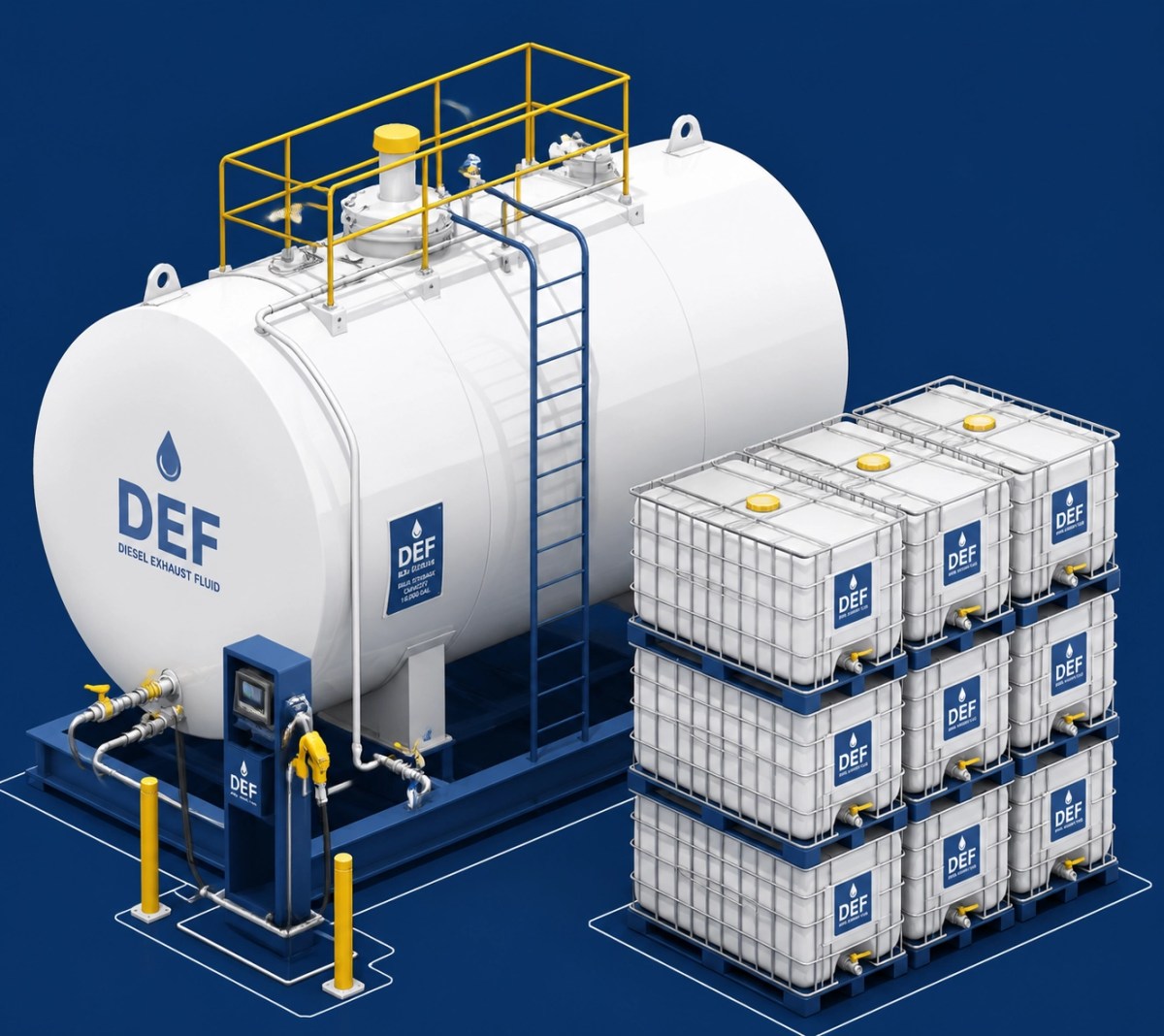
Are you still relying on 55-gallon drums when you should be using totes? Or maybe you have a large tank that is sitting in the direct sun? Improper storage leads to evaporation and chemical breakdown. If your storage is hard to access, your delivery driver will struggle, leading to spills and wasted time.
How to Fix It:
Evaluate your volume. If you go through more than 500 gallons a month, you need a bulk tank or a fleet of totes. Check out this guide on tote delivery vs 55-gallon drums to see what fits your scale. Move your storage to a shaded, temperature-controlled area if possible.
3. You Lack Real-Time Inventory Tracking
If you are "guessing" when you need a refill, you are going to run out. Running out of DEF isn't just an inconvenience; it stops your trucks. On the flip side, ordering too much leads to old stock that might expire.
How to Fix It:
Stop using a stick to measure your tanks. Install a simple tank monitor. Many modern bulk DEF delivery services offer remote monitoring. They can see your levels and schedule a delivery before you even know you're low. This keeps your fleet moving without the panic of a "low DEF" light on a Monday morning.
4. Crystallization is Clogging Your Systems
When DEF evaporates, it leaves behind white urea crystals. These crystals clog your injectors and lines. This often happens if your trucks sit idle for too long or if you are using low-quality fluid. Crystallization can lead to thousands of dollars in exhaust system repairs.
How to Fix It:
Use high-quality DEF and keep your systems sealed. If you notice white crust around your tank or nozzles, clean it immediately with distilled water. Don't let it build up. You can also look into DEF additives designed to prevent crystallization if your trucks do a lot of stop-and-go driving.
5. You’re Using Too Many Different Suppliers
Buying from whoever is cheapest this week sounds like a good idea for the budget. In reality, it’s a logistics nightmare. Every supplier has different delivery windows, different billing systems, and different quality levels.
How to Fix It:
Consolidate. Find one reliable bulk DEF delivery partner that can handle your needs nationwide. This simplifies your invoicing and ensures the fluid quality is consistent across your entire fleet. A single point of contact makes it much easier to solve problems when they arise.

6. You Aren’t Monitoring Temperature Extremes
DEF has a "Goldilocks" zone. It freezes at 12°F (-11°C) and starts to decompose if it stays above 86°F (30°C) for long periods. If your bulk tank is sitting in the baking sun in July, the urea concentration will change, and your trucks' sensors will pick up the error.
How to Fix It:
Keep your bulk storage indoors or in a secondary enclosure. If you are in a cold climate, make sure your bulk tanks have heaters or blankets. If the fluid freezes, it’s okay to thaw it and use it, but the expansion can crack your tanks if they are too full.
7. You’re Ignoring the Shelf Life
Yes, DEF expires. In ideal conditions, it lasts about two years. In a hot warehouse, that drops to six months. If your delivery strategy involves buying a year’s worth of fluid to get a discount, you might be feeding your engines "dead" fluid by month eight.
How to Fix It:
Use the "First In, First Out" (FIFO) method. Always use your oldest stock first. Label your totes with delivery dates. If you aren't sure how much you're using, you might be making one of the common 7 mistakes with DEF delivery.
8. Driver Error and Misfueling
It happens more than people like to admit. A driver puts DEF into the diesel tank or diesel into the DEF tank. Both are disasters. If diesel gets into the DEF tank, it ruins the SCR catalyst. If DEF gets into the diesel tank, it can wreck the entire fuel system and engine.
How to Fix It:
Education is key. Label every tank clearly. Use color-coded caps (blue for DEF). If a mistake happens, do not start the engine. Drain the tank immediately. It’s a $500 mistake to drain a tank, but a $20,000 mistake to replace an engine.

9. Your Procurement is Decentralized
If every branch of your company is buying their own DEF, you are losing out on massive volume discounts. You also have no way to track total spend or quality across the board. One branch might be getting great service while another is stuck with a local supplier that is always late.
How to Fix It:
Switch to a national distributor. Having a nationwide delivery strategy for all your industrial lubricants and DEF ensures that every location follows the same standards. It also gives you more leverage for better pricing.
10. You Aren’t Doing Preventive Maintenance
Most fleet managers wait for a fault code to pop up before they look at the DEF system. By then, the damage is done. Pumps fail, filters clog, and sensors go bad. A reactive strategy is always more expensive than a proactive one.
How to Fix It:
Treat your DEF system like your oil. Change DEF filters according to the manufacturer’s schedule. Check for leaks in the lines during every inspection. Clean the dosing valves regularly to prevent buildup.
Why the Right Supplier Matters
Your bulk DEF delivery strategy is only as good as the company bringing you the fluid. At Ascend Wholesale, we focus on making the process simple. We know you don't want to spend your day worrying about urea concentrations or delivery routes.
Whether you are looking for a reliable diesel exhaust fluid supplier, an industrial lubricants supplier, or even an aviation oil supplier, we have the nationwide network to keep you running. We offer competitive pricing and a simple approach to distribution.
Stop letting a poor DEF strategy slow your fleet down. Fix your storage, track your inventory, and partner with someone who understands the stakes.
If you're ready to scale your operation and want to see how bulk delivery can help, check out our post on how bulk DEF helps you scale.
For personalized service that beats a standard call center, contact Ascend Wholesale today. We make sure your delivery is on time, every time, so you can get back to work.